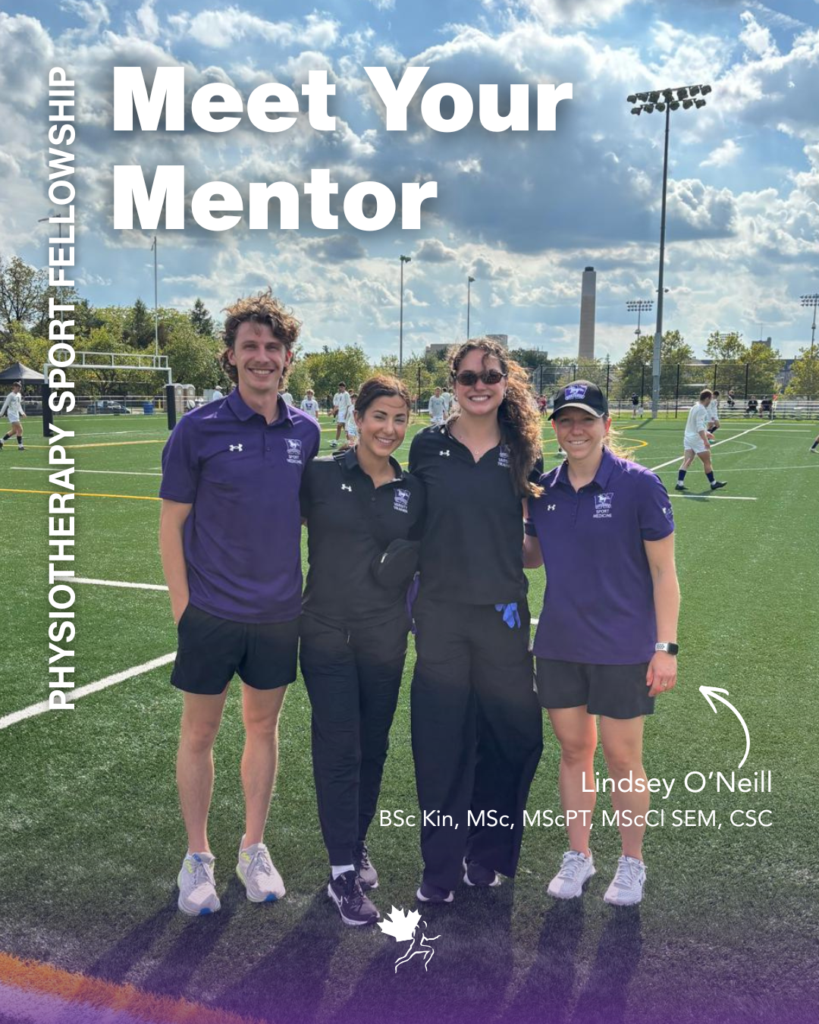
What sport organizations, teams, or associations have you been involved with throughout your career?
- Western Mustangs Varsity Therapist
- Collingwood Blues Jr. A Hockey Team
- Cricket Canada
What is your role in supporting the sport physiotherapy fellows throughout their fellowship, and what do you enjoy most about it?
My role in supporting sport physiotherapy fellows involves mentoring fellows through patient assessment and clinical reasoning, discussing rehabilitation planning, helping with return-to-sport decision-making, and providing exposure to the interdisciplinary environment that exists in high-performance sport. I also see the role as creating a space where fellows feel comfortable asking questions, challenging ideas, and developing confidence in their own decision-making as clinicians.
Beyond the clinical side, I think mentorship is also about helping fellows navigate the professional side of sports medicine — communication with athletes, coaches, physicians, and other healthcare providers, as well as understanding the expectations and pressures that come with working in sport.
What I enjoy most is watching fellows grow over the course of the fellowship. It’s rewarding to see someone become more confident, more efficient, and more independent in their thinking and patient management. I also enjoy the collaborative nature of the learning process. Fellows often bring new perspectives, current research, and thoughtful questions that challenge me to continue learning and refining my own practice. That shared growth and enthusiasm for sport physiotherapy is one of the most fulfilling parts of the role.
How would you describe the learning environment and culture within the fellowship?
The learning environment within the fellowship is very positive, supportive, and collaborative. We strive to create a culture where fellows feel comfortable asking questions, sharing ideas, and learning through both successes and challenges. There is a strong emphasis on open communication and mentorship, with the goal of helping each fellow grow both clinically and professionally. Another strength of the culture is the sense of teamwork. Everyone is invested in each other’s development, and there is a genuine willingness among staff and fellows to support one another.
What advice would you give someone who is thinking about applying for the fellowship?
My advice to someone thinking about applying for the fellowship would be to come in with an open mind and a willingness to learn. The fellows who tend to get the most out of the experience are those who are receptive to feedback, ask questions, and actively seek opportunities to grow both clinically and professionally. The fellowship can be demanding and requires a strong work ethic, as there are often long hours and high expectations, but the experience and mentorship gained throughout the process are incredibly valuable. Ultimately, you get out of the fellowship what you put into it, so being engaged, motivated, and willing to fully immerse yourself in the experience will make a significant difference in your growth and success.